

Student Project
A healthier planet, one leaf at a time.
Forest Friend
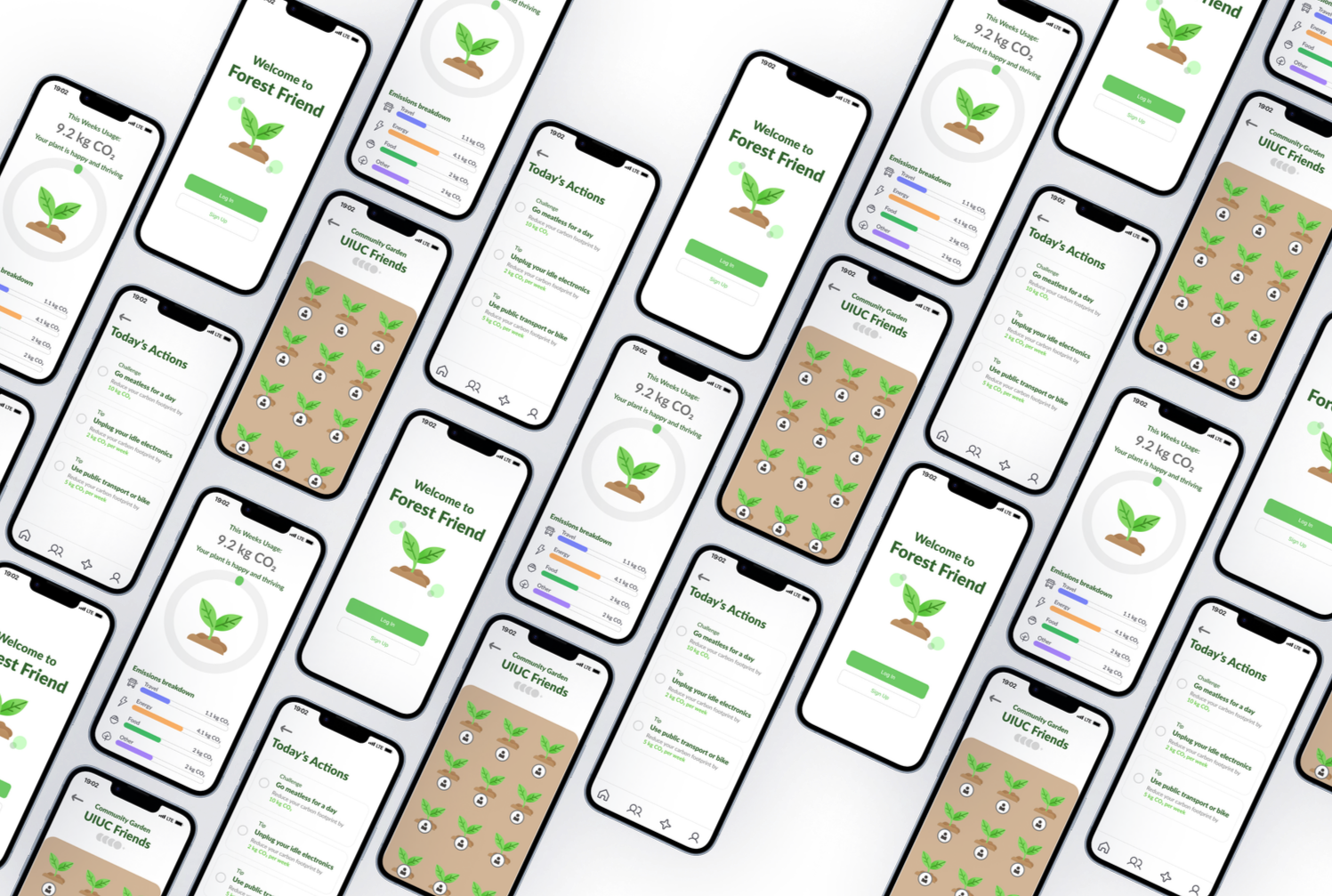
Forest Friend is a mobile app that turns sustainable daily actions into care for a digital plant. It is an eco-accountability app that helps users visualize and reduce their carbon footprint through a simple gamified system.
Role: UX Designer
Tools: Figma, Figjam, paper, pencil
Duration: 8 Weeks
Many people want to live more sustainably, but carbon emissions feel abstract, difficult to measure, and easy to ignore. Even when users are aware of sustainable practices, they often lack daily accountability, positive reinforcement, and simple tools to track their impact.
The problem
BRAnding
Color Palette

Font Used
Logo
Research and Insights
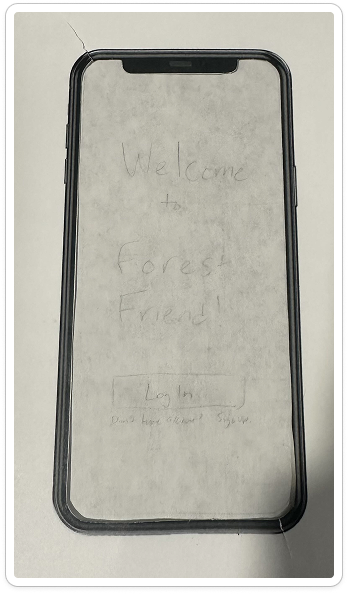
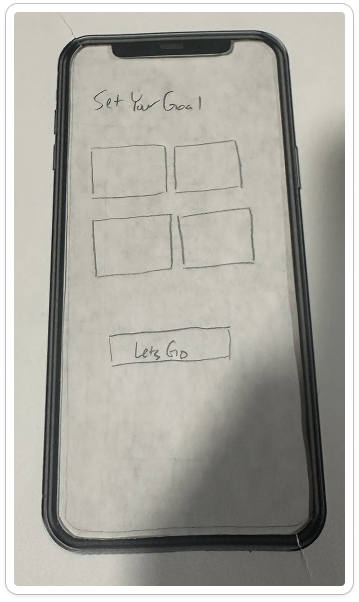
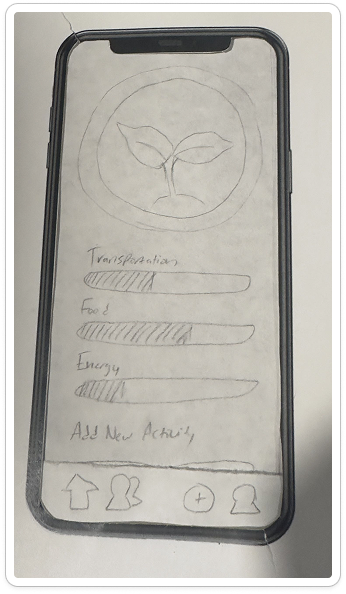
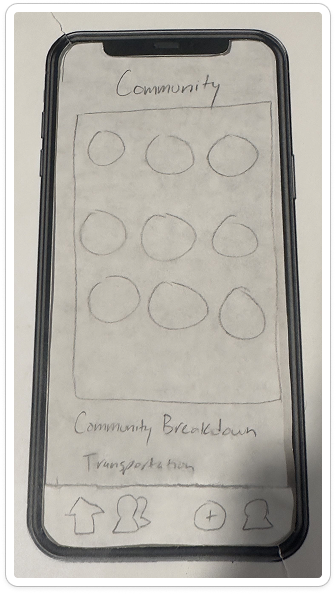
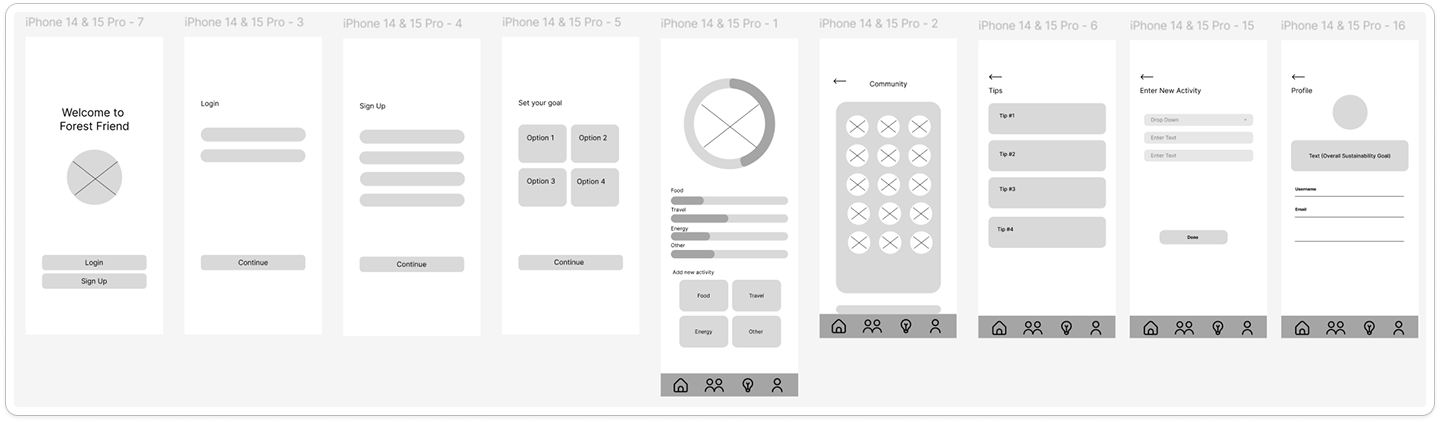
Mid-Fidelity Prototype
SOLUTION
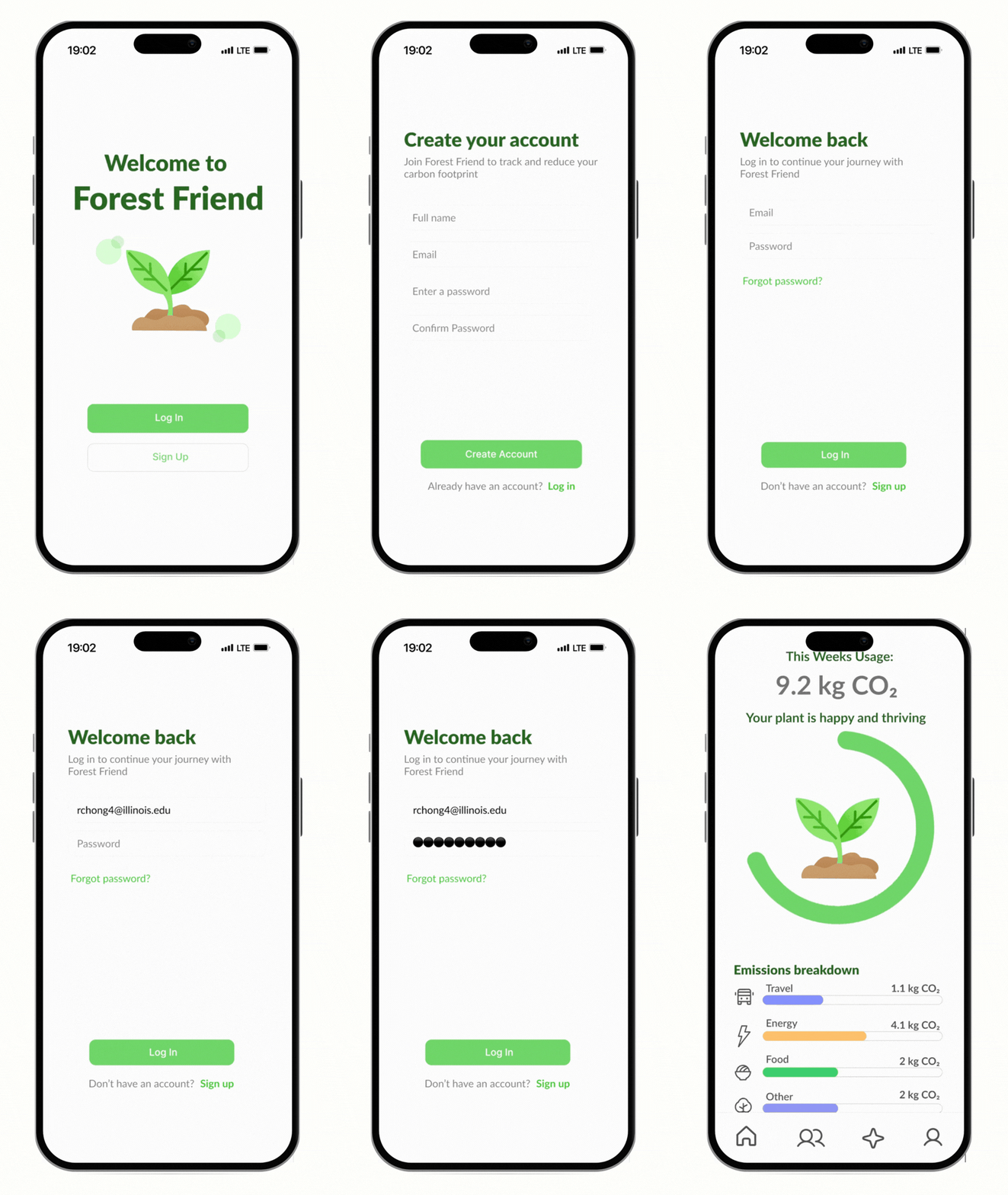
Forest Friend - See the change you make
The goal of Forest Friend is to make environmental impact visible and actionable through gamification. It aims to help users understand their daily habits, like travel and food choices, through simple visuals, empowering them to make sustainable changes that keep their digital ecosystem thriving.
Key Features
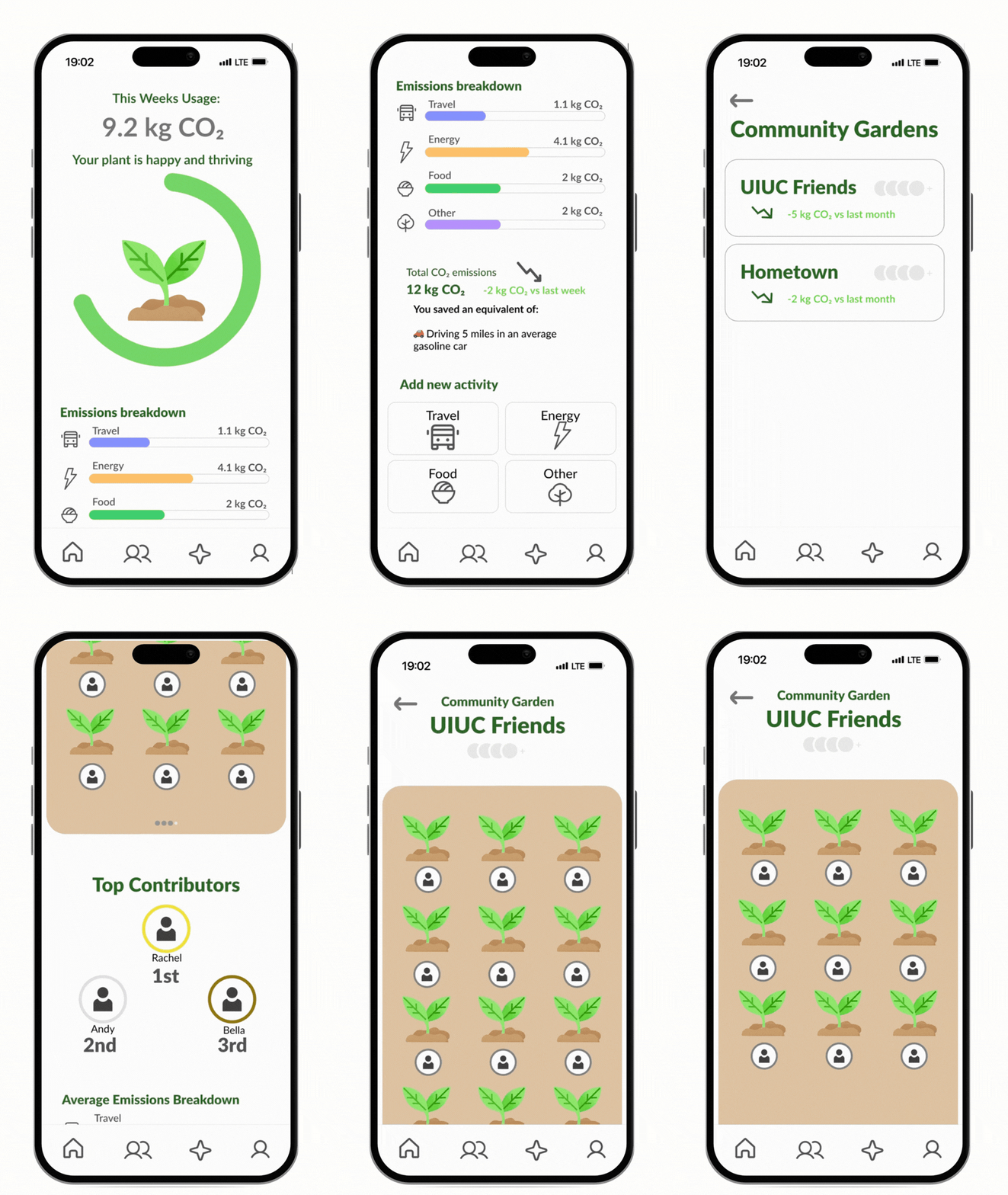
The Living Dashboard (Visual Impact)
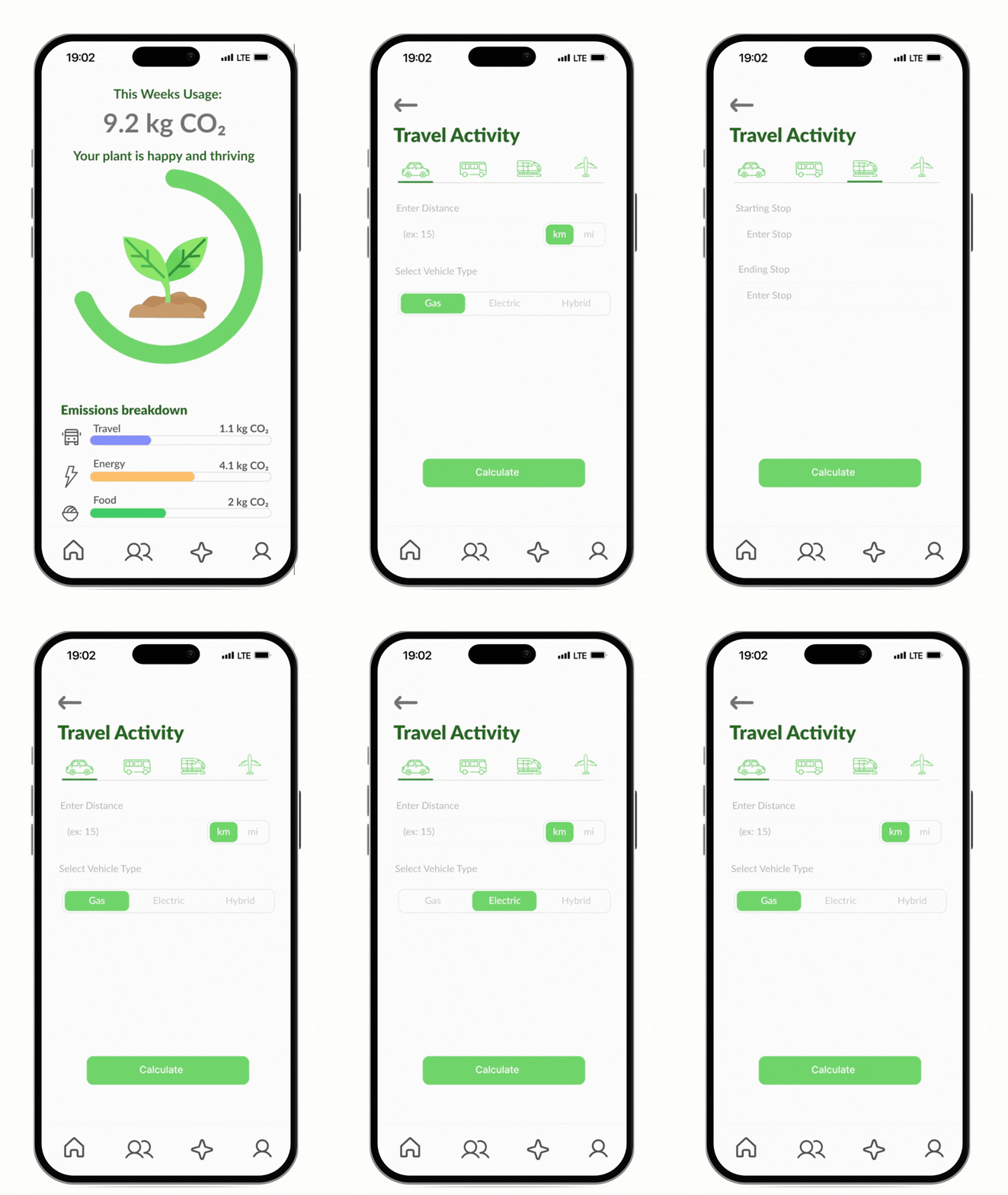
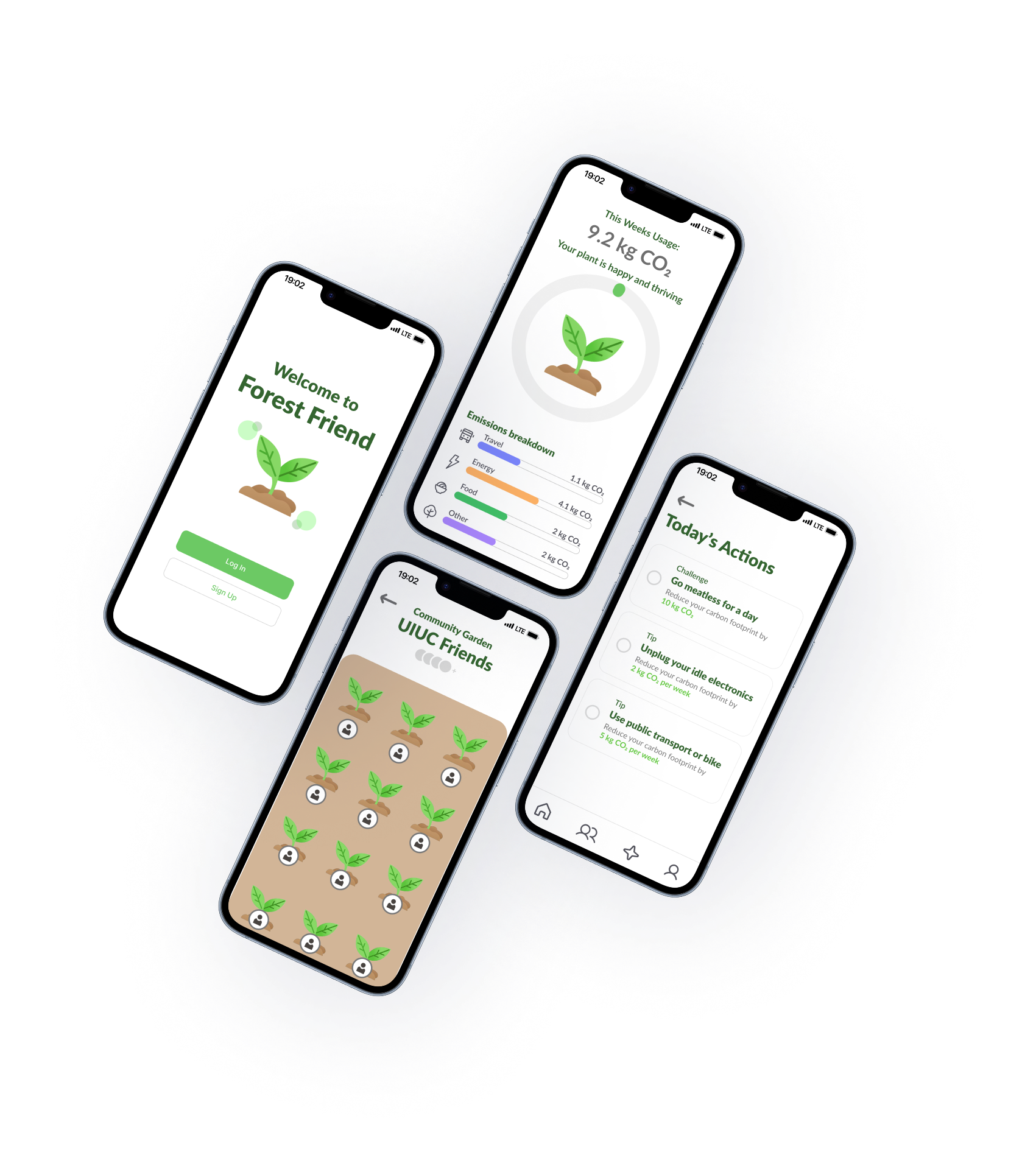
Environmental data is represented by a digital plant mascot and a circular, animated progress bar that surrounds your plant. It provides users with immediate "glanceable" feedback.
Categorized Emissions Breakdown
Specific tracking for Travel, Energy, and Food with color-coded progress bars to show users exactly which lifestyle area needs the most adjustment.
Community Garden
Allows users to join forces with friends, schools, or local organizations to visualize their shared progress.
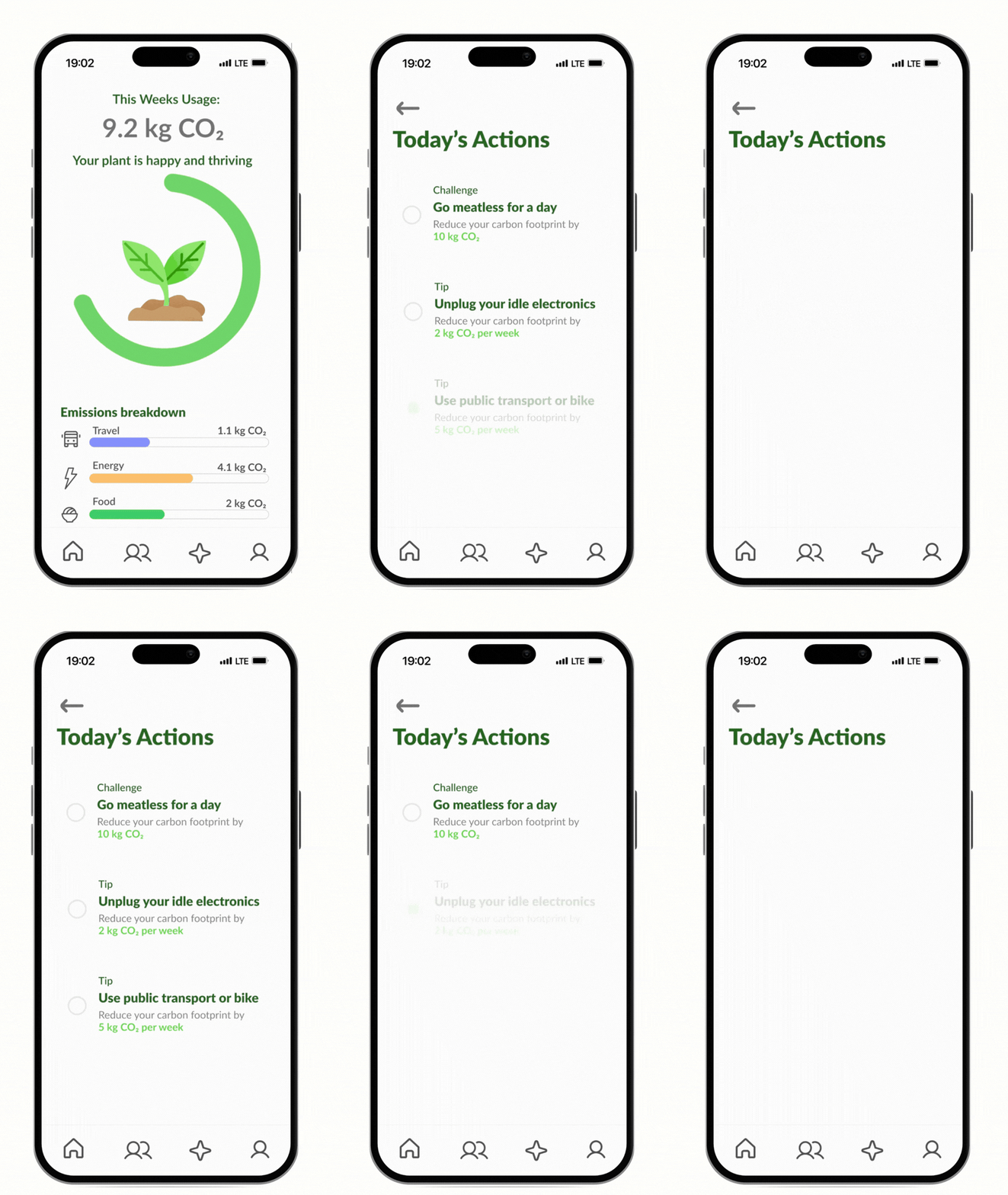
Actionable Steps
Provides users with challenges and goals to achieve to increase their progress and impact.
Takeaways -
Building Forest Friend from the ground up taught me that UX design is less about aesthetic choices and more about strategic problem-solving by conducting my own research and user interviews. This project sharpened my ability to translate complex data into "glanceable" visual hierarchies and taught me how to manage a project's lifecycle, from identifying a core pain point to designing a scalable, community-driven solution.
If I had more time, I would have conducted a second round of usability testing specifically on the 'Community Garden' flow to see if users felt motivated or pressured by the social features.